By Miguel Angel • April 30, 2026
Short Answer:
Most people describe the smell as:
- Fishy or chemical: often the first sign of overheated plastic insulation or older Bakelite components
- Burning plastic: a sharper smell tied to wire sheathing, outlets, or electrical components under heat stress
- Metallic or acrid: commonly associated with electrical arcing, especially near higher-voltage gear
A burning or fishy smell near an outlet, panel, disconnect, or piece of equipment is not something to wait out. It can be one of the earliest signs that wiring, insulation, or a component is overheating.
In South Florida, high humidity and heavy AC demand can make it easy to second-guess what you are smelling. But when the odor is persistent and strongest near electrical equipment, it should be treated as a warning, not a ventilation issue.
If you manage a commercial property, operate a facility, or own a home with older electrical infrastructure, this guide helps you tell the difference between a harmless smell and a real electrical warning.
What An Electrical Fire Usually Smells Like
What makes electrical odors tricky is that they often show up before smoke. In many cases, the first warning is not flame. It is heat, odor, or a breaker acting up under load.
If you notice any of these smells near electrical equipment, treat it as a real signal, not background noise. You can also review warning signs of electrical trouble from NFPA.
Why Electrical Problems Create That Smell
When a wire, connection, or electrical component overheats, the insulation and plastic parts around it start to break down. As that happens, they release the smell people often describe as fishy, chemical, or like burning plastic.
Heat can build up for several reasons: a loose connection at a terminal, a circuit running more load than it was designed for, a failing breaker that is not tripping when it should, arcing between contacts, or physical damage to a panel or device.
In residential settings, we often see this connected to panels with no room for additional circuits, lights that dim when the AC or water heater turns on, breakers that trip repeatedly, or T-tab and 2-tab panel types that are known to fail.
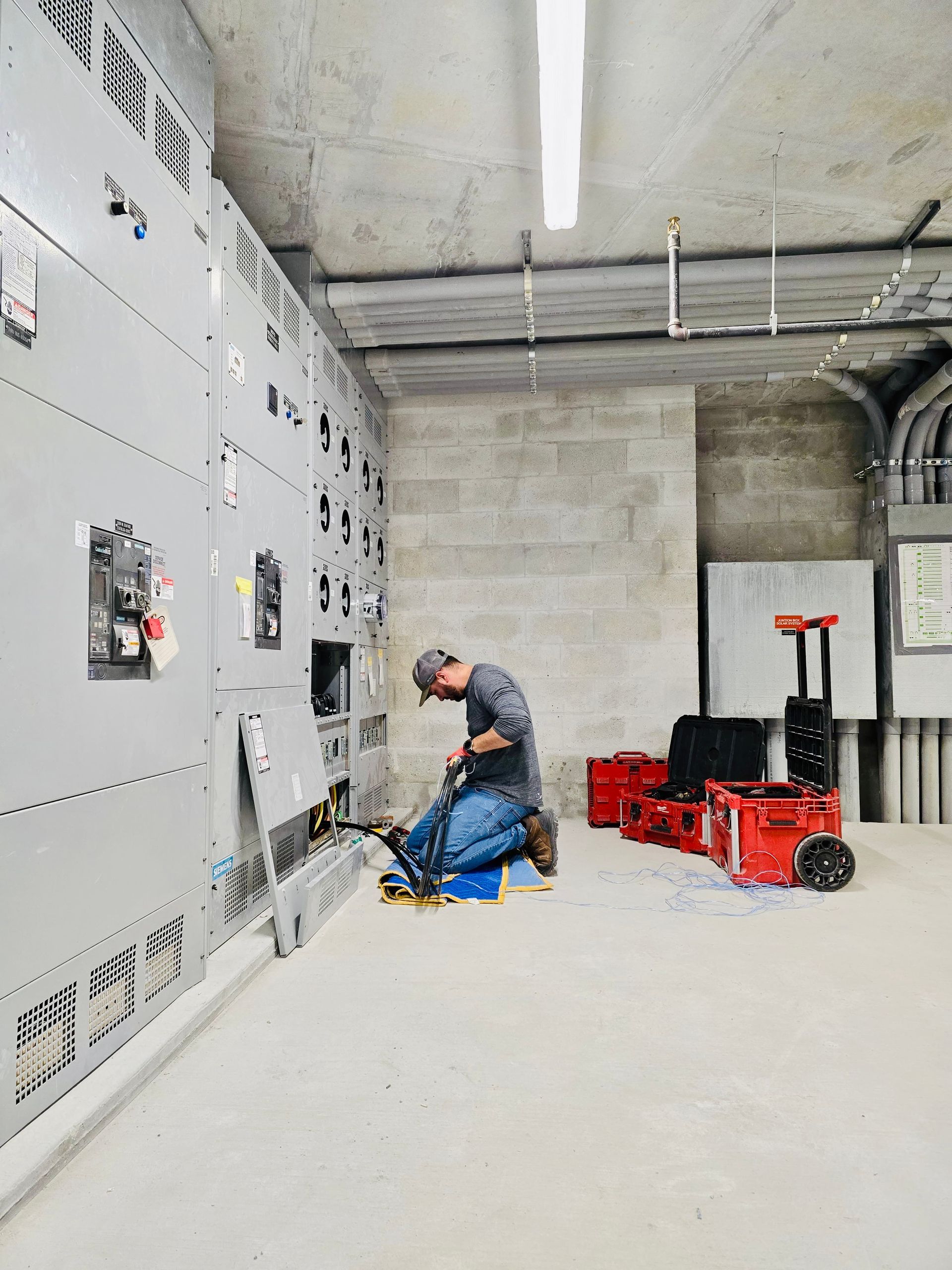
In commercial buildings and facilities, the source is often the electrical panel room, a disconnect, transformer enclosure, rooftop unit wiring, or a build-out area where circuits were recently modified or overloaded.
In many cases, the first warning is not flame. It is heat, odor, flickering, or a breaker reacting under load.
Common Smells And What They May Mean
Fishy Or Chemical Smell
This is one of the more commonly misidentified smells. It is not a plumbing issue. It often points to overheated plastic insulation or older components such as Bakelite breaking down under heat.
If the smell is near your panel, an outlet, or electrical equipment, have it inspected. Do not dismiss it.
Burning Plastic Smell
This is a more serious signal. Burning plastic near an outlet, switch, or inside a panel typically means the wire sheathing, receptacle body, or panel component is actively overheating.
This is not a smell to investigate slowly. If it is strong or localized, shut off power to that area if safe and call a contractor.
Sharp Metallic Or Ozone Smell
This often points to arcing, meaning electricity is jumping a gap it should not be jumping. Arcing is a fire risk and can occur in outlets, panels, disconnects, and around higher-voltage commercial and industrial equipment.
A sharp, clean metallic or ozone-like smell near electrical gear should trigger an immediate inspection.
Rotten Egg Smell
This is important to distinguish. A rotten egg smell is usually not electrical. It may point to a gas leak or a sewer-related issue.
If you smell rotten eggs, follow gas leak safety protocols. If you are unsure, call the utility and evacuate until it is confirmed safe.
Dusty Burnt Smell That Goes Away Quickly
When HVAC equipment starts up after a period of inactivity, dust burning off the heating element or coils can produce a brief, dusty burnt smell.
This usually fades quickly and is not electrical. But if the smell returns, grows stronger over time, or comes with breaker trips, flickering lights, buzzing, or heat near electrical components, that changes the situation. Have it checked.
Warning Signs That The Smell May Be An Electrical Emergency
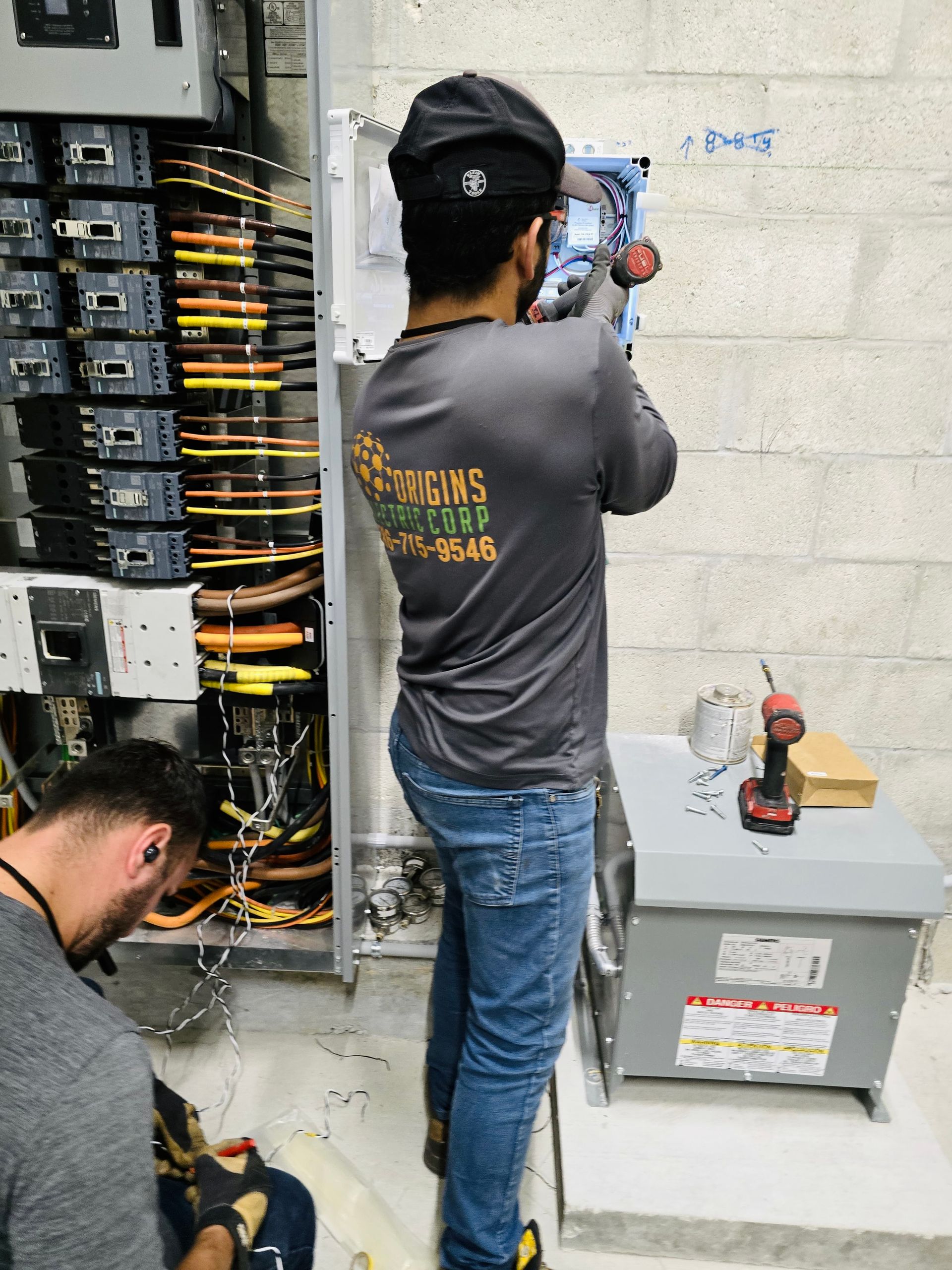
If the burning smell comes with any of the following, do not wait and see:
- Breakers that trip repeatedly and reset only to trip again
- Flickering or dimming lights, especially under load
- Buzzing, humming, or crackling sounds near outlets, panels, or equipment
- An outlet, switch, or panel cover that feels warm or hot to the touch
- Visible smoke or discoloration near an outlet, breaker, or panel
- Partial power loss in one area or multiple circuits at once
- Sparks from an outlet, switch, or electrical panel
- The smell is strongest near a panel room, electrical closet, rooftop unit disconnect, transformer area, or server room
Any one of these combined with a burning smell is enough reason to call now. If you smell burning, see sparks, lose partial power, or breakers keep tripping, call now. If it is not urgent, send us a message and we will help you choose the safest next step.
Those warning signs also line up with common
electrical system hazard signs flagged by the U.S. Consumer Product Safety Commission, including dimming lights, buzzing, odor of overheated plastic, hot outlet covers, and breakers that need resetting often.
Where The Smell Usually Comes From
Electrical Panel
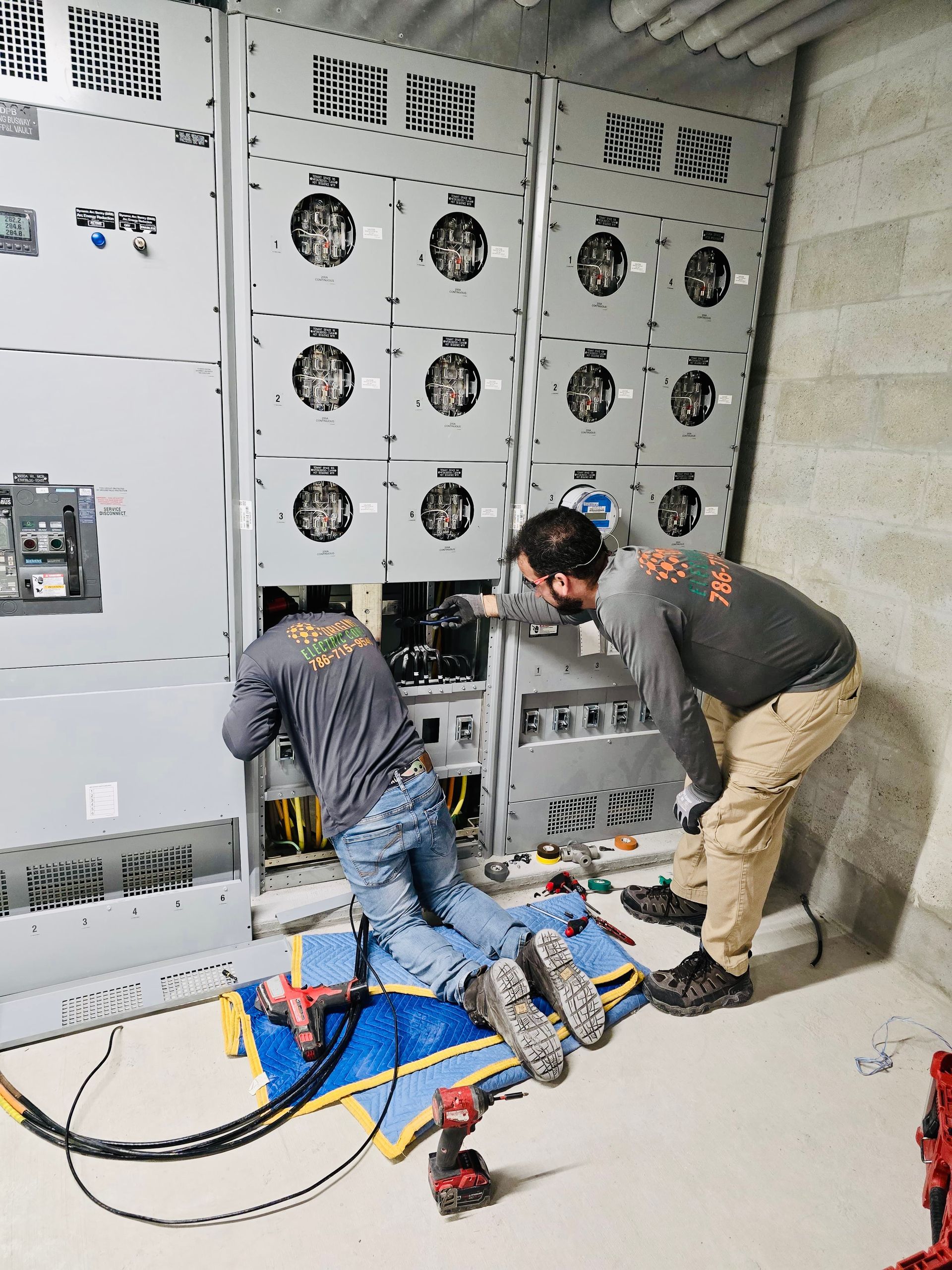
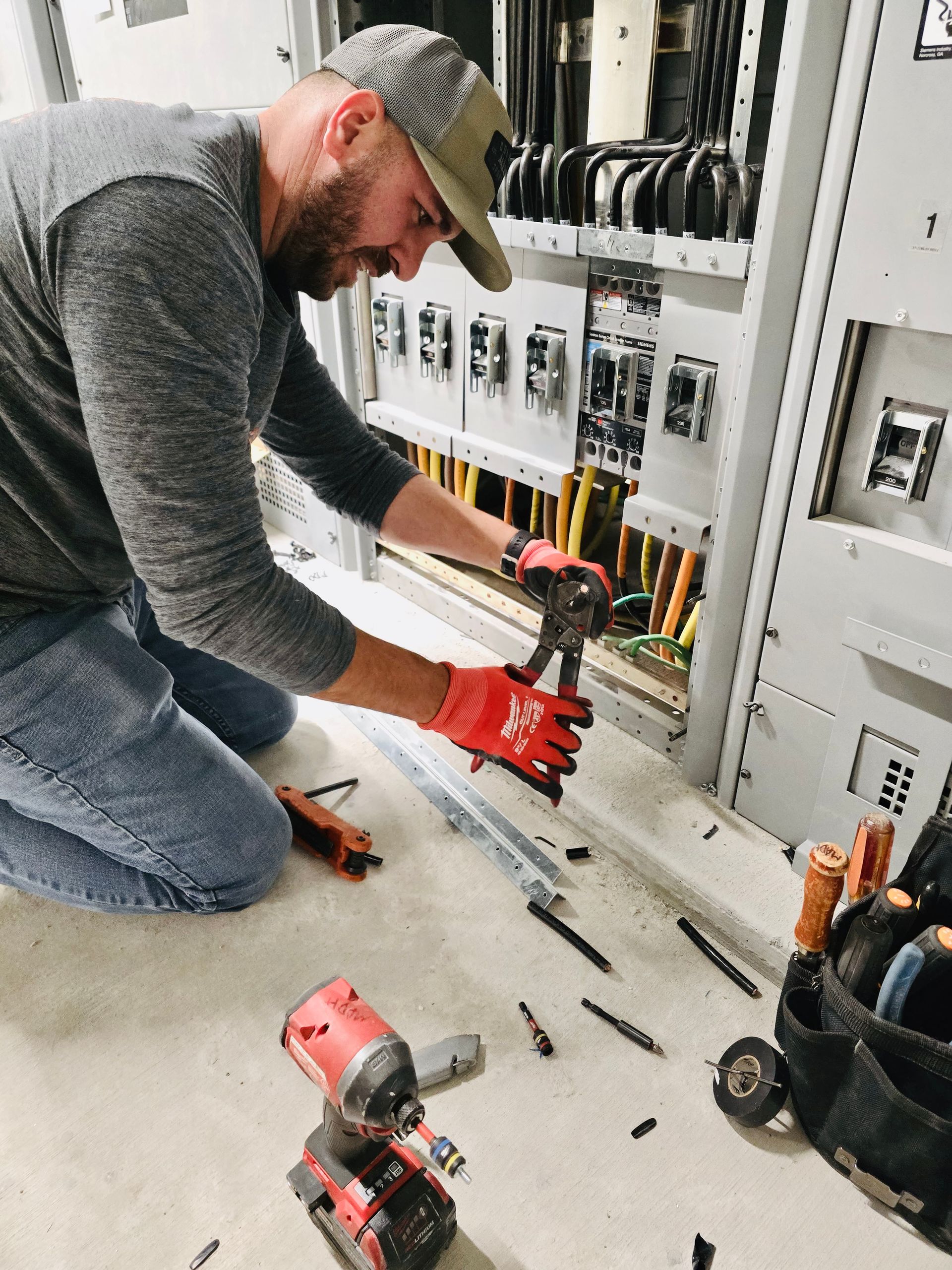
A burning smell coming from your electrical panel is one of the most serious scenarios. It can point to a failing breaker, a loose connection at a terminal or bus area, heat damage inside the panel, or a panel that no longer fits the electrical demand on the property.
For residential properties, this often connects to older panels that were not built for today’s load demands. For commercial properties, it can point to a service upgrade need or a build-out that added circuits beyond what the panel can safely carry.
In many panel-related cases, the safe fix is not just replacing one breaker. It may involve a service upgrade, circuit correction, or other code-compliant work that needs to be properly documented and inspected when required. In Miami-Dade, for example, electrical permits are handled through the county or the local municipality depending on where the property is located.
Origins Electric Corp handles panel upgrades, service upgrades, and panel risk troubleshooting for residential and commercial properties across South Florida. If the problem is tied to a larger property scope, our commercial electrical services team can help.
Outlet Or Switch
A burning plastic smell at one outlet or switch usually points to a loose wire connection, a worn device that is running hot, or a circuit carrying more load than that device was meant to handle.
The outlet may be the visible problem, but the real issue could be the wiring termination, the circuit load, or heat damage behind the device. Replacing the outlet alone does not solve that.
AC Unit Or Air Handler
In South Florida, air conditioning systems run hard for much of the year. That long-duty-cycle demand makes it more important to trace dimming, hot wiring, and recurring breaker trips tied to AC startup instead of brushing them off as normal.
We regularly see electrical issues connected to AC load, including lights that dim when the system starts, breakers that trip under compressor demand, and wiring at the air handler or disconnect that runs hot over time.
If the smell is strongest near the air handler or shows up when the AC kicks on, the electrical side of that system needs to be inspected.
Commercial Electrical Closet, Transformer, Or Three-Phase Equipment
Commercial and industrial properties have their own exposure here.
A burning smell in an electrical closet, near a transformer enclosure, around three-phase distribution equipment, or near electric motors is a maintenance and safety issue that should be checked by a licensed contractor with commercial experience.
In retail centers, offices, and tenant build-outs, these smells often show up after a space is modified, new equipment is added, or lighting loads change without the distribution being rechecked.
Property managers, facility operators, and general contractors should take any unusual smell in these spaces seriously. Origins Electric Corp works with transformers, three-phase lines, electric motors, commercial maintenance, and service upgrades across South Florida.
What To Do Immediately If You Smell An Electrical Fire
Stay calm and move through these steps in order:
- Do not ignore it. The smell is not going to resolve itself. Even if it fades temporarily, the problem that caused it is still there.
- Do not keep resetting the breaker. If a breaker tripped because of heat or overload, resetting it and continuing to run the circuit makes the situation worse. A breaker that keeps tripping is not the problem. It is the warning.
- Unplug nearby devices only if it is safe to do so. Do not reach into a space that smells like burning or shows heat near outlets.
- Shut off power to the affected area at the panel if you can do so safely. For a localized smell near one outlet or circuit, turning off that breaker is a reasonable precaution.
- If you see smoke, heat damage, or sparking, do not remove covers or start opening equipment to investigate it yourself. If there is visible heat damage or fire, leave the area. Evacuate and contact emergency services.
- Call a licensed electrical contractor for troubleshooting. Once the immediate situation is safe, the next step is a professional inspection and diagnosis.
We’ll help you choose the safest next step based on what you’re seeing and smelling. For emergencies, call us directly. For quick questions or if you are not sure whether it is urgent, send a message on WhatsApp with the address and a brief description.
When You Should Not Wait And See
One of the most common mistakes we see is the wait-and-see approach after a burning smell fades. The smell often does fade as the source cools down temporarily.
But the loose connection, the overloaded circuit, the failing breaker, or the heat-damaged insulation does not fix itself during that cooling period.
When the load returns, when the AC starts again, when multiple devices run at once, or when the building demand climbs, the heat builds right back up. The next episode may be more serious than the first.
If the smell returns, grows stronger under load, or appears at the same time each day or under the same operating conditions, it needs professional service. Do not mask the symptom. Find the source.
That is the standard we bring to every troubleshooting call. Find the cause, correct it properly, and leave you with work that is safe to put back into service.
A Quick Facility Manager Checklist For Commercial Spaces
Before calling, this information helps us understand the situation faster and quote you more accurately:
- Where is the smell strongest? Panel room, electrical closet, rooftop unit disconnect, transformer enclosure, tenant space, server room, or a general area?
- When did it start? After a load change, a new build-out, new equipment installation, or lighting work?
- Are there secondary symptoms? Tripped breakers, buzzing, warm panel covers, discoloration, tenant complaints about power, or flickering?
- Is it isolated or widespread? One circuit or one tenant space, or multiple areas?
- What changed recently? New tenants, equipment additions, lighting retrofits, or any electrical work by another contractor?
This checklist is useful whether you are calling us or any licensed contractor. The more specific the information, the faster the diagnosis.
At Origins Electric Corp, we support commercial properties across South Florida with troubleshooting, maintenance, service upgrades, and emergency calls. We work directly with general contractors and property management teams.
How To Help Prevent Electrical Fire Risks
Most electrical fire risks start with avoidable load, wiring, or panel issues.
- Do not overload older circuits. Plugging high-draw equipment into circuits not rated for the load is one of the most common causes of overheating.
- Address breaker trips instead of masking them. A breaker that trips repeatedly is doing its job. It is telling you the circuit is being pushed past its safe limit.
- Upgrade panels when capacity is no longer enough. A panel that has no room for new circuits, runs consistently hot, or is a known problem type needs replacement, not workarounds.
- Correct shared or improperly separated circuits. Circuits that share load across areas that should be independent create both safety risks and practical problems.
- Inspect outlets, switches, and panels that run warm. Heat where it does not belong is a sign of a problem at or behind the device.
- Do not ignore dimming under load. Lights that dim when the AC or a large appliance starts indicate a voltage drop that should be traced and corrected.
- For commercial properties, schedule routine electrical maintenance. This includes lighting checks, panel inspections, equipment wiring reviews, and site lighting assessments.
For commercial properties, this also means routine maintenance after tenant changes, lighting retrofits, added equipment, and other scope changes that can shift electrical demand. If your property needs larger-scope support, our commercial electrical services and industrial electrical services pages cover the kind of work we handle.
At Origins Electric Corp, we handle all of these: troubleshooting and repairs, panel upgrades and service upgrades, circuit corrections and separation, lighting maintenance and retrofits, and 24/7 emergency electrical service. You can reach us for troubleshooting requests and quote details.
Need Help Tracing A Burning Electrical Smell In South Florida?
If you smell something burning near your panel, outlets, disconnects, or electrical equipment, do not leave it alone.
At Origins Electric Corp we provide emergency troubleshooting for residential, commercial, and industrial electrical scopes across Miami-Dade, Broward, and Palm Beach.
We regularly troubleshoot burning smells, load issues, and panel risk for property managers, general contractors, facility operators, and homeowners who need clear answers and work that is done right.
To reach us:
- Get A Quote for non-urgent troubleshooting, photos, and scope details
- Call For Emergencies when there is smoke, sparking, partial power loss, or repeated breaker trips
- Send On WhatsApp for quick photos and a short description
Not sure if what you are dealing with is an emergency?
Contact our team, and we’ll help you choose the safest next step.
Frequently Asked Questions About Electrical Fire Smells
Why does my outlet smell like fish?
A fishy smell near an outlet usually points to overheated plastic insulation or older electrical components breaking down under heat. It is a known electrical warning sign, not a plumbing issue. If the smell is strongest near an outlet, switch, or panel, stop using that circuit and have it checked.
Is a burning plastic smell always electrical?
Not always. But if the smell is near an outlet, switch, panel, air handler, or any electrical equipment, treat it as electrical until proven otherwise. Burning plastic near electrical components is a reliable indicator of overheating and should not be ignored.
Can an AC unit cause a burning smell?
Yes. In South Florida, AC systems run under heavy load for extended periods. Electrical issues connected to HVAC equipment are common, including failing wiring at the air handler, overloaded circuits feeding the compressor, or disconnect issues. If the smell appears when the AC runs, that system needs electrical inspection.
Does an electrical burning smell always come with smoke?
No. The smell often appears well before any visible smoke. That is the warning window. If you wait for smoke, the heat damage is likely already more severe.
Can I keep using the circuit if the smell goes away?
No. Not until a licensed electrician has inspected and cleared it. The underlying cause of the smell is still present even when the odor fades. Running the circuit again brings the same risk back.
Is this different in commercial buildings?
Yes. In commercial and industrial buildings, burning smells often come from panel rooms, disconnects, transformers, three-phase distribution equipment, electric motors, recent build-out work, or maintenance-related failure points. The source should be traced by a contractor who works with commercial systems, not just residential service calls.
Licensed and Insured
Smart electrical tips, straight to your inbox
Get practical advice, safety tips, and updates to help you protect your home and plan your next project with confidence.
Contact Us
We will get back to you as soon as possible.
Please try again later.
SHARE THIS
Latest Posts