By Miguel Angel • June 16, 2026
Quick Answer:
- Power outage preparedness should include electrical system planning, not only emergency supplies.
- Generator connections require proper transfer equipment. A direct connection to a breaker panel without a transfer switch creates a serious backfeeding risk.
- Surge protection and panel condition should be reviewed before storm season, especially for commercial properties.
- Commercial properties need a plan for critical circuits, security systems, emergency lighting, refrigeration, equipment, and tenant operations.
Miami-Dade, Broward, and Palm Beach properties can deal with extended outages, partial power loss, and equipment problems when power returns after severe weather.
Hurricanes, severe storms, and power fluctuations are part of owning or managing property here.
Most outage guides stop at supplies: food, water, batteries, flashlights. Those matter. But this guide focuses on the electrical system itself.
For commercial properties, an outage can interrupt tenant operations, security systems, refrigeration, access control, HVAC controls, and customer activity.
For serious home upgrades and industrial facilities, the electrical system needs to be ready before generator use, post-storm inspections, and surge-related equipment issues become urgent problems.
Why Power Outage Preparedness Needs an Electrical Plan
Food, water, batteries, and communication plans do not address what happens to the electrical system during and after an outage.
When a storm hits South Florida, the risks go beyond losing power. Generator misuse can create backfeeding hazards for utility workers restoring service nearby. Surges when the grid comes back can damage connected equipment.
Breakers that were already marginal start tripping. Partial power loss can point to a panel problem or a service entrance issue that needs an electrical contractor, not a reset.
For many South Florida commercial properties, backup power, surge protection, and critical circuit planning are not extras. They help keep tenants, equipment, lighting, access systems, and safety systems from becoming a bigger problem during or after an outage.
For commercial properties, commercial electrical services need to account for backup power, surge protection, critical circuits, lighting, access systems, and safety equipment.
Ready.gov's power outage guidance covers basic safety steps for any property. The electrical system preparation side is where a licensed contractor can help.
What Actually Fails During a Power Outage
The outage itself is not always the main problem. The moment power returns can create just as much risk.
When power is restored after a major storm, equipment left in the on position restarts at once. HVAC systems, refrigeration units, and large loads can pull a heavy inrush current simultaneously.
Servers, security systems, and office equipment can be damaged if they power back on during an unstable or surging restoration.
GFCI outlets or GFCI breakers may trip during heavy rain when moisture reaches protected circuits. That protection response can leave exterior areas, kitchens, garages, bathrooms, or equipment zones without power until the cause is identified and cleared.
Breakers that trip after a storm sometimes expose circuit issues that already existed. An overloaded circuit or a marginal wiring condition may become a clearer problem once the panel goes through a power cycle.
After storms, some properties that seemed fine before the outage start showing capacity, breaker, or panel condition issues once power returns. A panel review before storm season can catch problems before they turn into an emergency call.
The Main Electrical Risks Before and After a Storm
Unsafe Generator Connections
A generator should never connect directly to a breaker box without proper transfer equipment. FPL's generator safety guidance explains the backfeeding risk clearly: power fed back into utility lines puts line workers at serious risk of electrocution while they work to restore service.
Without a transfer switch, that backfed current can also damage your generator and connected equipment.
An electrical contractor should review your generator setup, load needs, and code requirements before you rely on it. The transfer switch type, sizing, and installation method all affect how safely the system operates.
Power Surges and Brownouts
Power fluctuations, including brownouts and restoration surges, can damage sensitive equipment. HVAC controls, security systems, servers, point-of-sale systems, appliances, and office equipment are all at risk when voltage swings during and after an outage.
Whole-panel surge protection sits at the main panel and reduces the risk of damage from surges coming through the utility lines. It is a year-round protection measure, not only a storm prep item.
For commercial properties with significant equipment exposure, it is worth reviewing as part of a pre-season electrical scope.
Older or Overloaded Panels
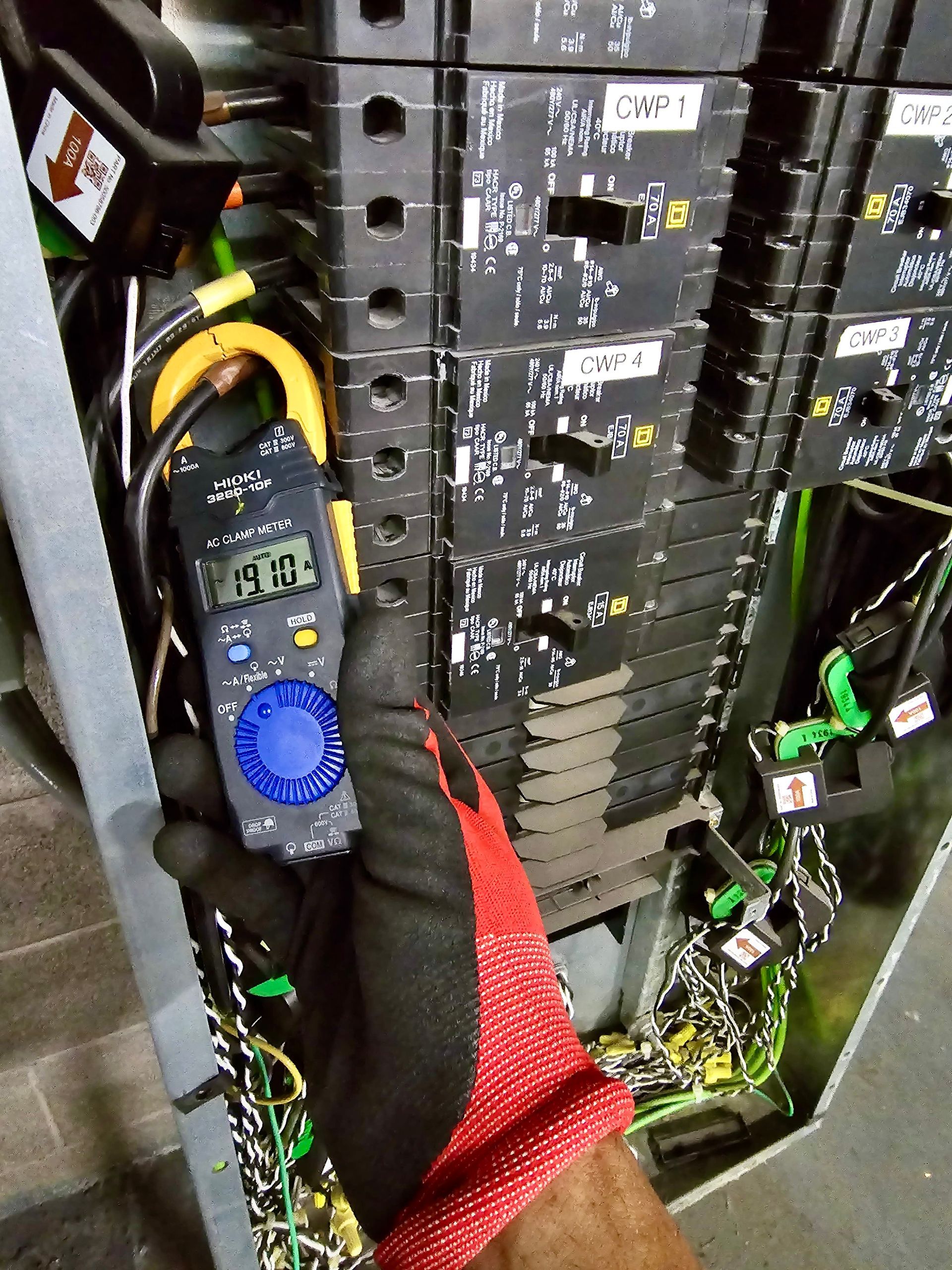
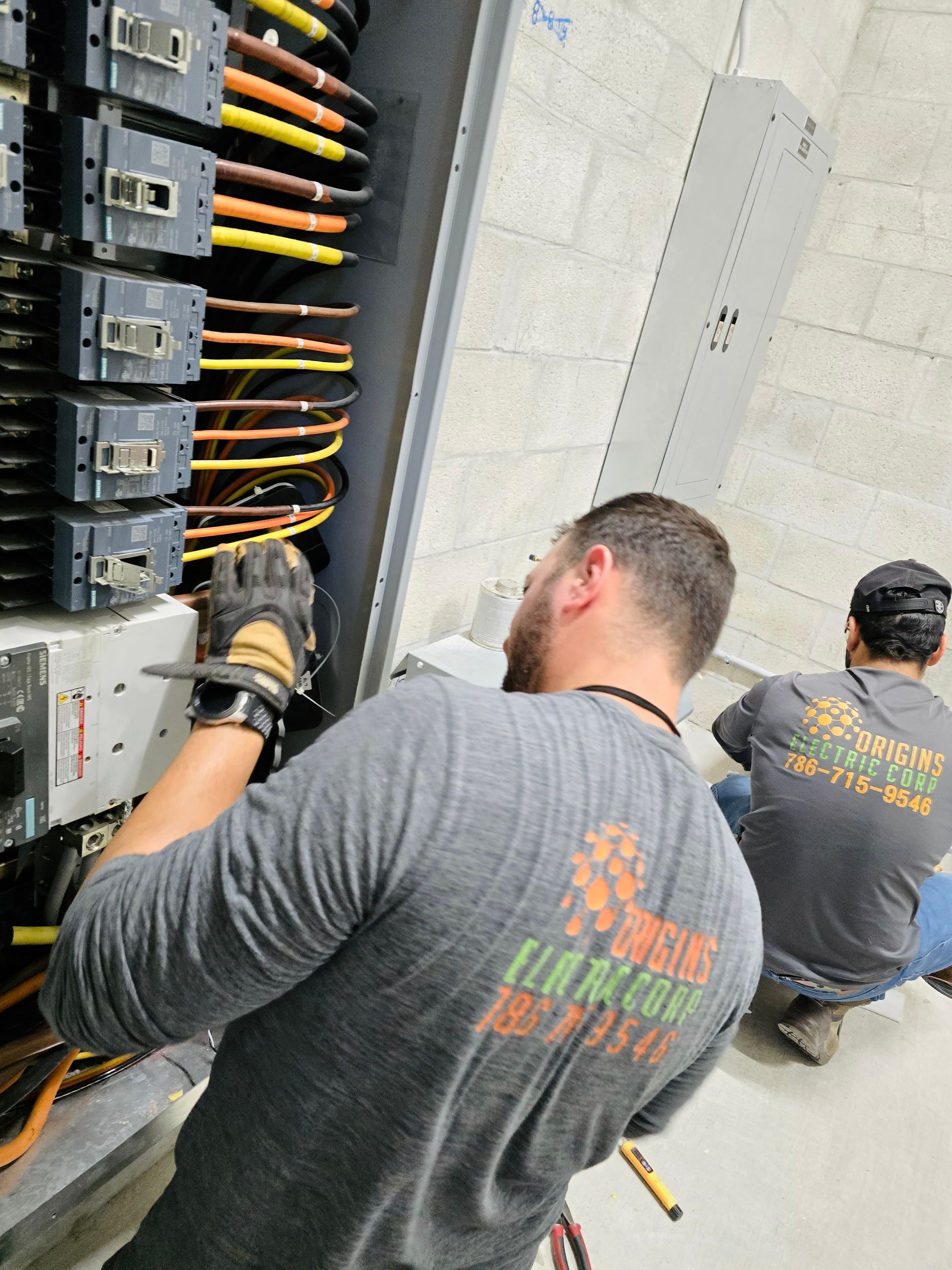
Storm season can reveal panel problems that already existed. A panel running close to capacity, one with repeated breaker trips, or one that has failed a recent inspection is more likely to show its limits when loads cycle after an outage.
Some older panel setups, including T-tab or 2-tab issues, may need replacement when they fail inspection, lack capacity, or no longer meet the property's electrical needs.
An electrical contractor can assess whether the current panel is a liability heading into storm season.
Flooded Circuits and Wet Equipment
Flooded outlets, panels, disconnects, or electrical equipment should not be re-energized until inspected by an electrical contractor.
ESFI flood electrical safety guidance notes that electrical hazards can remain after flood waters recede, so wet or flooded electrical equipment should be treated carefully before power is restored.
Water exposure can turn a routine outage into a serious electrical emergency. This applies to residential properties, commercial buildings, and industrial facilities equally.
Parking Lot and Site Lighting Hazards
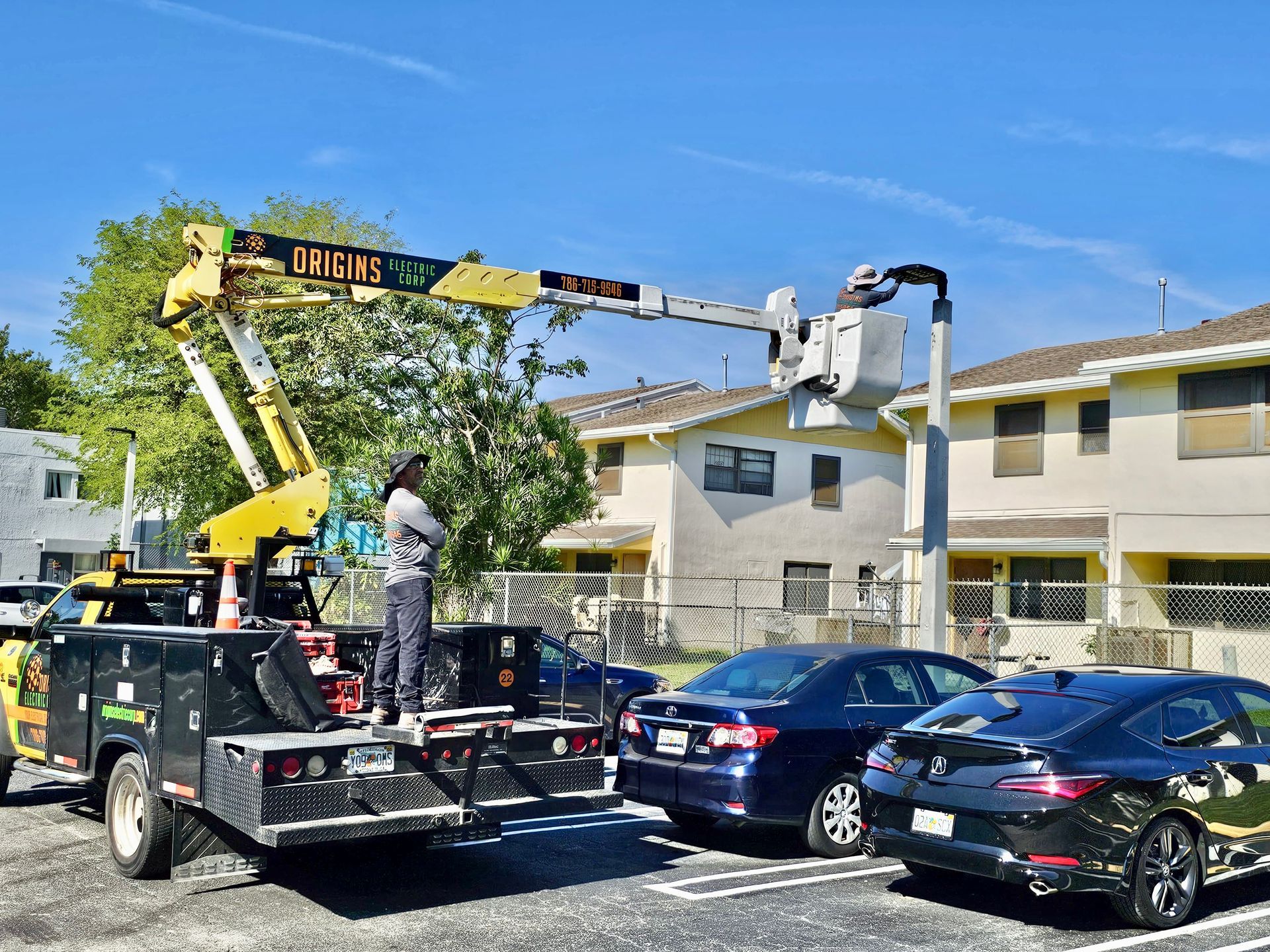
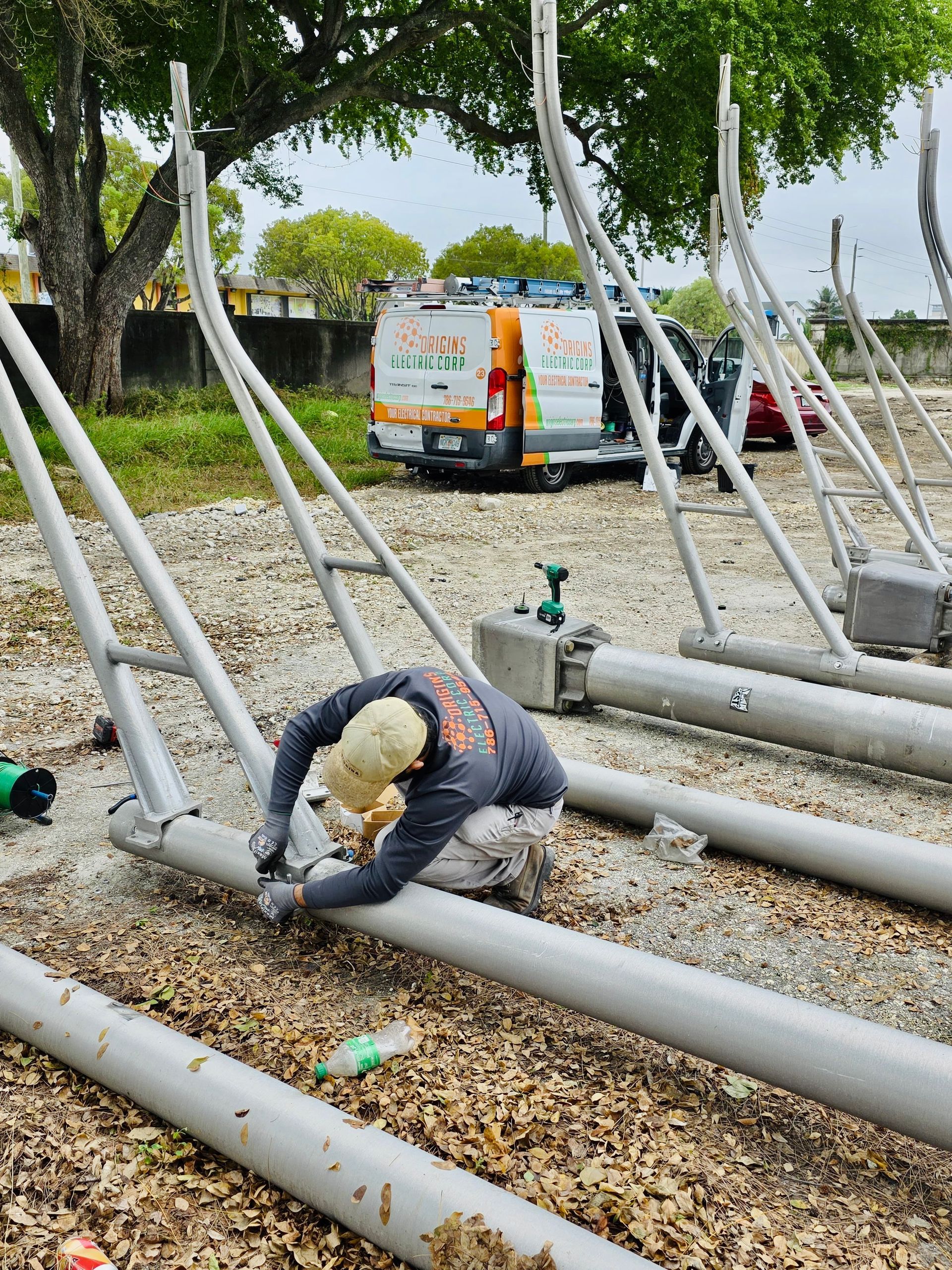
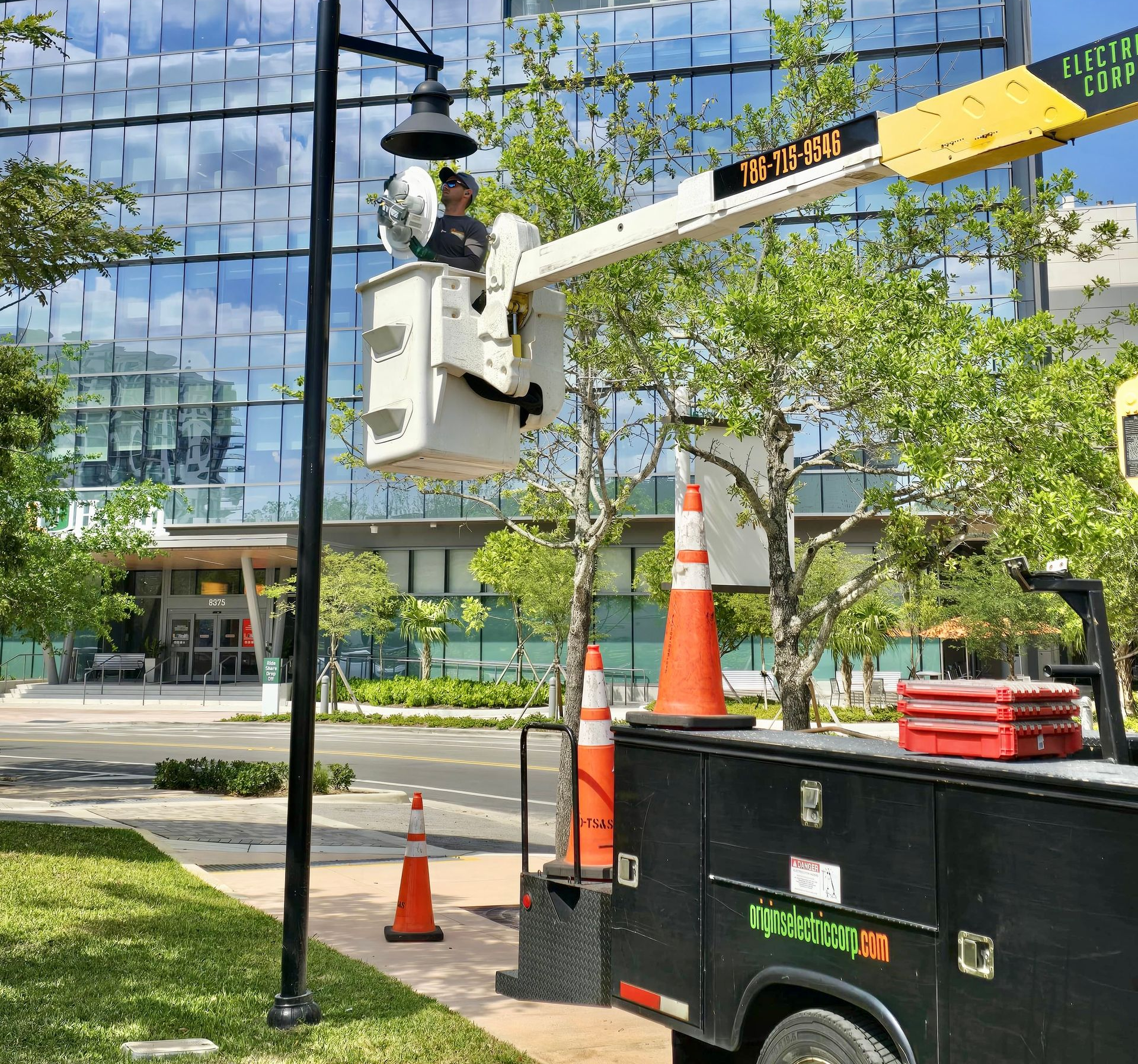
South Florida storms can damage parking lot lighting, warehouse exterior lighting, and light poles quickly. High winds stress poles, expose wiring, and knock out site lighting across a property.
For shopping centers, retail plazas, office buildings, and multi-tenant properties, damaged exterior lighting creates safety and access problems for tenants, customers, and employees.
Post-storm site lighting repairs should be prioritized to restore coverage before the property reopens.
What Commercial Properties Should Check Before Storm Season
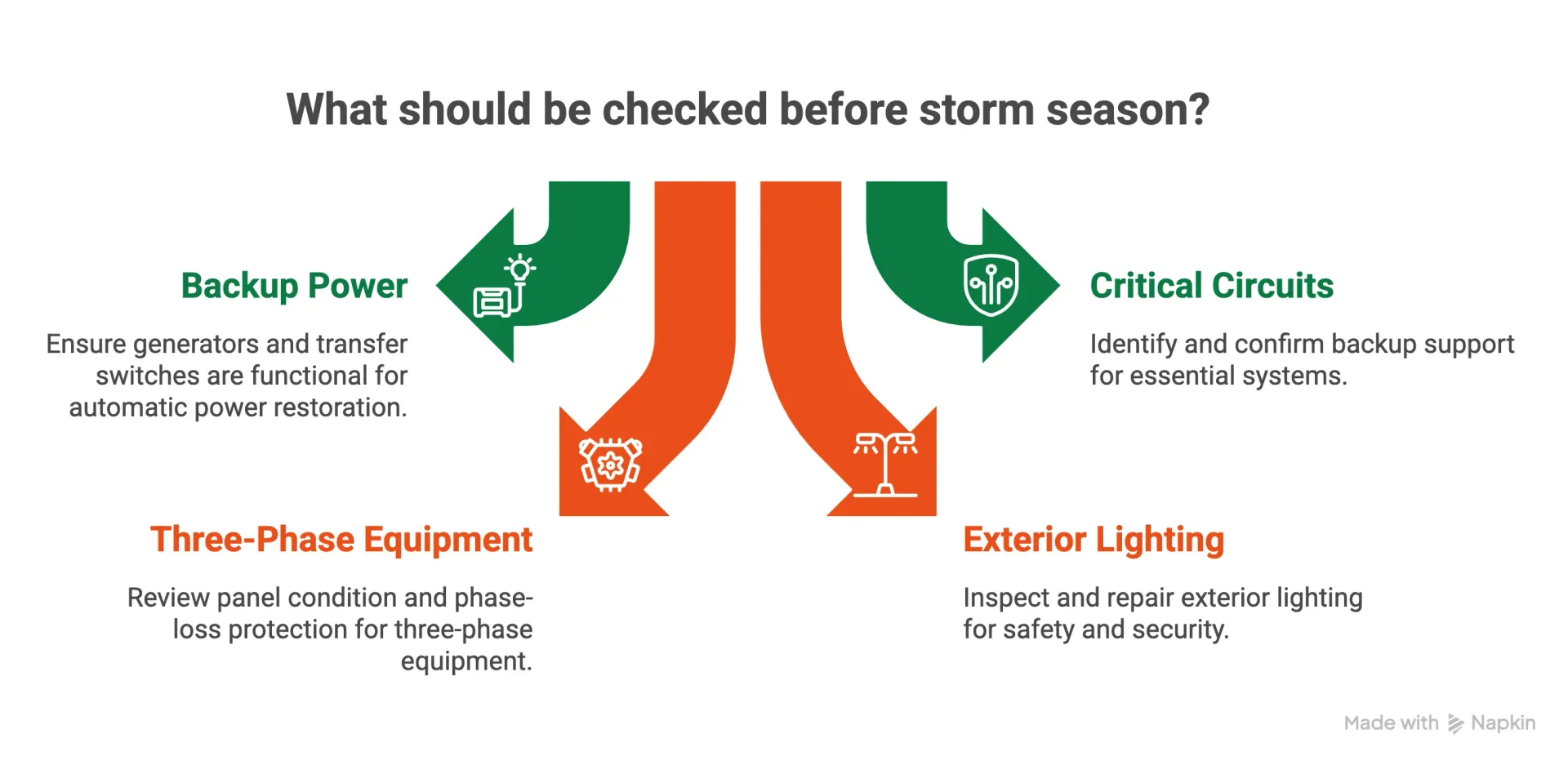
Backup Power and Transfer Switches
Standby generators provide automatic backup when utility power goes out. Portable generators can cover limited loads, but they need a code-compliant connection through a properly installed transfer switch.
Load planning matters. A contractor-grade electrical team can help identify which circuits are critical, size the generator to those loads, and confirm what permits are required in your city or county.
Critical Circuits
Not every circuit in a commercial building needs backup power. The critical ones do, and they need to be identified before an outage, not during one.
Security systems, servers, refrigeration, access control, emergency lighting, HVAC controls, and tenant operations all qualify as critical for most commercial properties. Documenting which circuits those are, and confirming they have backup support, is part of a solid pre-storm plan.
Three-Phase Equipment
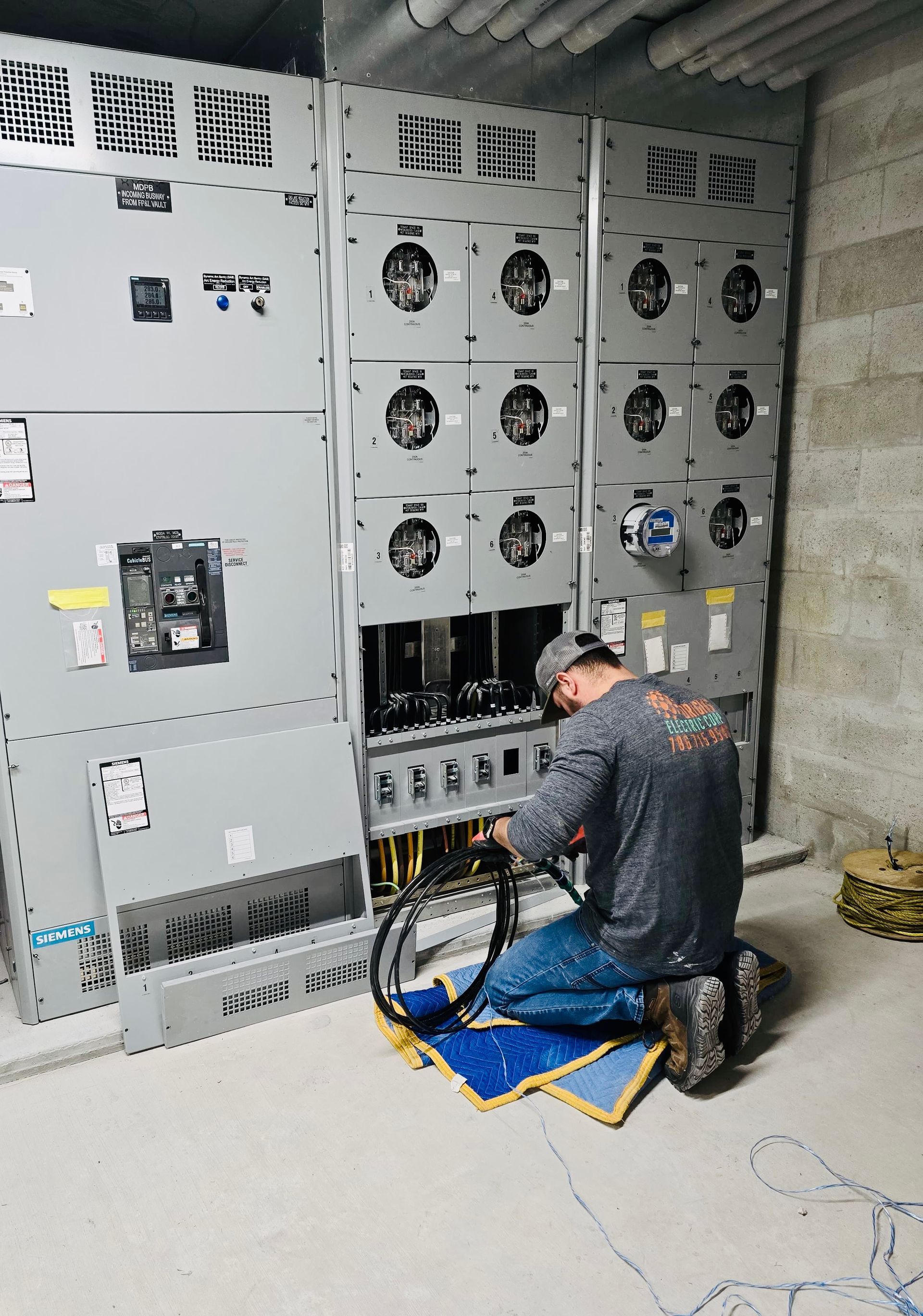
Commercial and industrial properties running three-phase equipment face additional risk during power restoration. When one phase of a three-phase service returns late or at a different voltage, motors and equipment can be damaged.
Before storm season, it is worth reviewing panel condition, load balancing, and whether phase-loss protection is in place for critical three-phase equipment. For facilities with heavy motor loads, this should be part of the electrical planning conversation.
Exterior Lighting and Site Safety
A pre-storm inspection of parking lot lighting, warehouse exterior fixtures, and light poles can identify equipment that is already marginal and more likely to fail under storm conditions. Post-storm, exterior lighting repairs should be prioritized to restore safe access and security coverage across the property.
What To Send for a Faster Quote
If you are ready to schedule a review or get pricing on pre-storm electrical work, send us the following and we will reply with next steps:
- Property address
- 3 to 5 photos of the panel, generator area, exterior lighting, or any damaged equipment
- A short description of the scope or the problem you are seeing
- Timeline or deadline
- Plans, panel schedules, or photos of existing equipment if available
- Access notes for electrical rooms, roof areas, parking lots, or service equipment
Send photos and a quick scope description on WhatsApp for the fastest response. For formal bids and commercial scopes, send plans by email. If there are sparks, burning smells, exposed wires, or flooded equipment, call directly instead of waiting for a message reply.
What Homeowners Should Check Before an Outage
For high-end homeowners, remodel clients, and homes with serious electrical needs, outage preparedness means more than keeping flashlights charged.
Panel age and capacity matter. A panel running near capacity is more likely to show problems when loads cycle after an outage. Whole-home surge protection is worth reviewing for any home with significant appliances, HVAC equipment, or sensitive electronics.
Dedicated circuits for high-draw appliances, EV charger loads, and security camera systems should be part of a pre-storm electrical review. If the lights dim when the AC starts, or breakers trip regularly, those are signs of circuit or panel issues that deserve attention before storm season starts.
Generator connection planning applies at the residential level too. A properly installed transfer switch is required before a portable generator can safely connect to the home's electrical system.
Residential electrical services that include panel capacity reviews, dedicated circuit work, GFCI troubleshooting, and generator planning are the right scope for a serious home before storm season.
What To Do When the Power Goes Out
These steps apply to residential, commercial, and industrial properties:
- Do not connect a generator directly to your panel. A transfer switch is required for a safe connection.
- Turn off sensitive equipment if power flickers or surges before and during an outage.
- Do not reset breakers repeatedly. A breaker that keeps tripping is signaling a problem. Resetting without identifying the cause can make the underlying issue worse.
- Stay away from flooded panels, outlets, disconnects, and electrical equipment. Do not restore power to wet equipment without an inspection.
- Watch for burning smells, sparks, or buzzing sounds. These require an electrical contractor.
- Call for emergency electrical services when there are active safety signs. Do not wait.
- For non-emergency troubleshooting, send photos and a short scope description on WhatsApp. We can help you identify the safest next step before dispatching.
When You Should Not Wait To Call an Electrician
Some conditions after a storm require a call, not a reset. Do not wait if you notice any of the following:
- Burning smell from the panel, outlets, or wiring
- Sparks or arcing
- Buzzing or humming from the panel
- Partial power loss
- Breakers that keep tripping after a reset
- Flooded or wet electrical equipment
- Generator connection concerns
- Exterior lighting with damaged poles or exposed wiring
- Exposed wires after a storm
If you smell burning, see sparks, lose partial power, or breakers keep tripping, call now. If it is not urgent, send a message and we will help you choose the safest next step.
Our emergency electrical services are available 24/7. After-hours and weekend emergency pricing applies.
A Quick Property Manager Checklist Before Hurricane Season
Use this list to organize pre-storm electrical preparation for commercial properties, shopping centers, facilities, and multi-tenant buildings:
- Confirm generator plan and transfer switch setup
- Identify and document critical circuits
- Review panel condition and available capacity
- Check surge protection at the main panel
- Inspect parking lot lighting, exterior lighting, and light poles
- Document existing electrical issues before a storm for insurance and repair purposes
- Confirm permit requirements for any planned upgrades
- Save emergency electrical contact information
- Prepare photos, plans, access details, and scope notes for faster post-storm troubleshooting
How To Prepare Your Electrical System Before the Next Outage
South Florida's hurricane season runs June through November. Scheduling electrical work before the season starts avoids the backlog that builds once a storm is already in the forecast.
A pre-season electrical review can cover panel condition and capacity, whole-panel surge protection, generator integration and transfer switch planning, critical circuit identification, overloaded circuit corrections, and exterior lighting inspection.
For commercial properties, industrial facilities, and serious home upgrades, this work should be permit-ready and inspection-ready where required. Clean documentation supports insurance reviews, city inspections, and post-storm recovery if repairs are needed.
Origins Electric Corp provides electrical services for commercial scopes, serious residential upgrades, industrial needs, troubleshooting, panel work, and emergency support.
Panel upgrades, generator installation, transfer switch work, commercial electrical maintenance, and circuit separation all fall within a contractor-grade pre-storm scope.
Need Help Preparing Your Property for Power Outages in South Florida?
If your property needs more than a temporary outage plan, Origins Electric Corp is a family-owned electrical contractor serving commercial, industrial, and serious residential electrical needs across South Florida. We can help you prepare the electrical side before storm season.
We serve commercial, industrial, and serious residential scopes across South Florida, including Miami-Dade, Broward, and Palm Beach.
We work with commercial properties, industrial facilities, General Contractors, property managers, and serious homeowners on scopes that include:
- Commercial generator installation
- Transfer switch installation
- Surge protection
- Panel upgrades
- Circuit separation
- Storm-related troubleshooting
- Parking lot and site lighting
- Emergency electrical support
For planned work, get a quote with the address, scope, photos, and any plans you already have.
For active hazards, call for 24/7 emergency electrical services.
For General Contractors and property teams with formal scopes,
send plans to speed up pricing.
Origins Electric Corp is your electrical contractor for organized, contractor-grade electrical work across South Florida.
Frequently Asked Questions About Power Outage Preparedness
Do I Need a Transfer Switch for a Generator?
Yes. A generator connected directly to a breaker panel without a transfer switch can backfeed power into the utility lines, putting workers at risk while they restore service. An electrical contractor should review your generator setup, load requirements, and code compliance before installation.
Can Power Surges Damage My Electrical Panel?
Surges from power restoration or lightning can damage equipment connected to your system and may expose existing panel issues. HVAC controls, servers, and security systems are particularly vulnerable. Whole-panel surge protection reduces exposure for the entire system, not just individual devices.
Should a Commercial Property Have Whole-Panel Surge Protection?
Many should, especially properties with servers, security systems, refrigeration, HVAC controls, access control equipment, or tenant-operated equipment. Surge protection is a year-round measure, not only a storm precaution, and it protects the full electrical system rather than individual outlet-level devices.
What Counts as an Electrical Emergency After a Storm?
Sparks, burning smell, partial power loss, a buzzing panel, flooded or wet electrical equipment, exposed wires, and breakers that keep tripping all qualify. If you are unsure, send a message or call and we will help you assess the situation and identify the safest next step.
Can I Use a Portable Generator for My Business?
Some businesses use portable generators for limited loads, but the setup must be code-compliant and connected through a transfer switch. Larger properties with more significant load requirements may need a standby generator system. An electrical contractor can help you plan the right setup for your property size and critical circuit needs.
When Should I Schedule Electrical Storm Prep?
Before hurricane season starts in June. Scheduling in late winter or spring gives time to complete panel upgrades, generator installation, surge protection, and any permit-required work before demand builds. Do not wait until a storm is already in the forecast.
Licensed and Insured
Smart electrical tips, straight to your inbox
Get practical advice, safety tips, and updates to help you protect your home and plan your next project with confidence.
Contact Us
We will get back to you as soon as possible.
Please try again later.
SHARE THIS
Latest Posts